




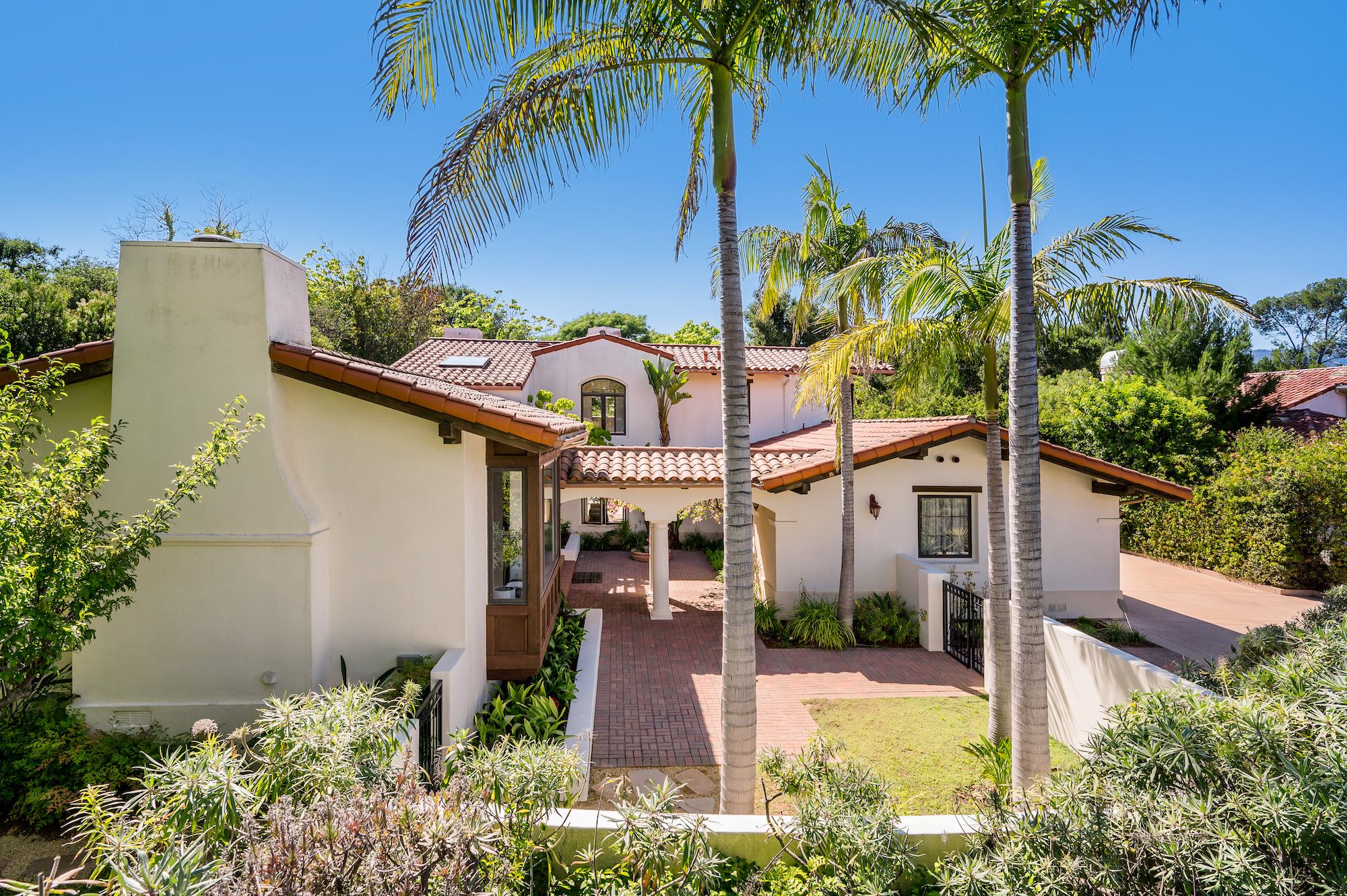
A courtyard entry illustrates how architecture and siting define privacy in West Palm Beach homes.
Privacy in residential design is rarely as simple as a gate or boundary wall. Even within gated communities in West Palm Beach, true discretion emerges from a more considered interplay of setting, site planning, and architectural intent.
Together, these elements influence not only visual separation but also the sense of calm within the home.
Table of Contents
- Location-based privacy factors
- Waterfront exposure and visibility
- Architectural design and privacy control
- Landscaping as a privacy tool
- Noise, activity, and environmental factors
- Balancing privacy with access and lifestyle
- How buyers evaluate privacy in practice
- Suzanne Frisbie’s advisory lens
- Frequently asked questions
- Approach privacy in West Palm Beach with clarity and intention
This guide outlines how to evaluate privacy across site selection, architectural planning, and landscape design − and how each element aligns with long-term livability.
PRIVACY IN WEST PALM BEACH HOMES: WHAT YOU NEED TO KNOW
|
LOCATION-BASED PRIVACY FACTORS
Privacy in West Palm Beach is shaped less by gates or square footage and more by how a home relates to its immediate surroundings. Street rhythm, neighboring density, and broader neighborhood context all contribute to how a residence feels in daily life. Even within gated communities in West Palm Beach, these nuances often determine whether a home feels secluded or more openly connected.
Consider the street’s pace and pattern.
A home’s position within the street network plays a defining role in its sense of privacy. Properties along through-streets or connector roads typically experience steady movement, introducing both sound and visibility. In contrast, quieter residential roads with limited access create a more contained and predictable environment. This distinction becomes especially relevant for vacation homes in West Palm Beach, where seasonal shifts can significantly alter neighborhood rhythm near waterfront and downtown corridors.
Evaluate neighborhood density and spacing.
The distance between homes directly shapes both visual and acoustic privacy. In historic areas, tighter setbacks and closer proximity create more immediate sightlines, even when softened by mature landscaping. Newer communities often prioritize larger lots and more intentional spacing, allowing privacy to be embedded into the planning rather than added afterward.
Weigh the lot position and exposure.
Lot placement introduces another important layer. Corner homes offer openness and light but introduce greater visibility from multiple directions. Interior lots provide a more contained experience with fewer external sightlines. This becomes especially important when evaluating waterfront homes in West Palm Beach, where views and discretion must be carefully balanced.
WATERFRONT EXPOSURE AND VISIBILITY
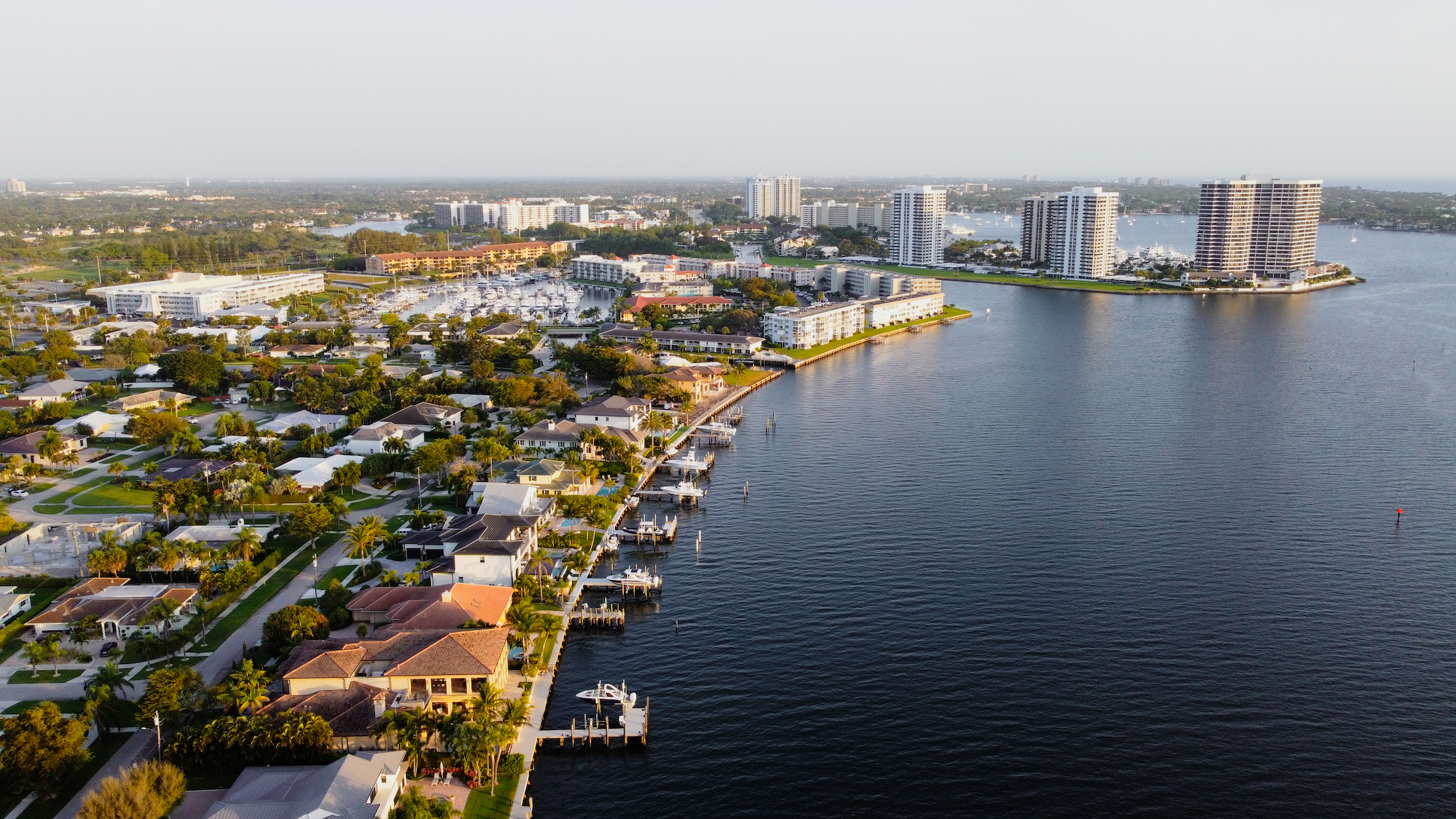
Waterfront homes in West Palm Beach strike the perfect balance between privacy and access to the city’s lifestyle amenities.
Coastal living in West Palm Beach is all about striking a balance between openness and discretion. While proximity to the water defines the experience, exposure varies significantly depending on siting, design, and surrounding use patterns. Understanding this balance is essential when evaluating waterfront homes in West Palm Beach.
Understand the Intracoastal experience.
Homes along the Intracoastal Waterway are designed to capture expansive, uninterrupted views. Broad glass elevations, open-plan interiors, and smooth integration to outdoor spaces place the water at the center of daily living. These elements elevate the experience, but they also introduce greater visibility from passing boaters, neighboring residences, and public vantage points.
Thoughtful design can soften this exposure, with layered landscaping, elevated living areas, and intentional orientation helping preserve privacy while maintaining sightlines.
Explore more private waterfront alternatives.
Canal-front and interior waterfront properties, especially those within gated communities in West Palm Beach, offer a more contained experience. Reduced boat traffic, narrower sightlines, and deeper setbacks from the water all contribute to a quieter setting.
Architectural planning becomes especially important here. Courtyard layouts, detached guest structures, and layered planting can shift focus inward, creating outdoor spaces that feel more protected and personal.
Balance views with discretion.
Every waterfront property involves a measure of trade-off. Expansive views often come with increased exposure, while greater privacy may require more selective framing of the water. The most considered homes resolve this tension through design, aligning openness with a sense of retreat that supports both daily living and long-term comfort, whether as primary residences or vacation homes in West Palm Beach.
ARCHITECTURAL DESIGN AND PRIVACY CONTROL
Privacy at the architectural level is where intention becomes experience. In West Palm Beach, for example, the most prized homes are carefully composed to feel open while remaining discreetly protected. This balance is achieved through layered design decisions that shape how a residence is seen, approached, and experienced.
Check where windows open and what they reveal.
Window placement has a direct impact on how exposed a home feels. Thoughtful layouts allow for light-filled interiors without creating clear sightlines into neighboring properties or from the street. Clerestory windows, elevated openings, and carefully angled glazing are often used to preserve privacy while maintaining openness.
Orientation is equally important. Many homes are designed to draw light from private gardens, interior courtyards, or rear-facing landscapes rather than public vantage points. The result is a residence that feels bright and open, without feeling exposed.
Understand how distance and elevation shape privacy.
Setbacks from the street create the first layer of separation between a home and its surroundings. The greater the distance, the more naturally a property is buffered from both movement and visibility. In many thoughtfully planned West Palm Beach neighborhoods, this spacing is a quiet but meaningful part of the overall residential experience.
Elevation further strengthens this effect. Homes raised above grade reduce direct street-level visibility while improving outlook and airflow. This subtle shift in height often enhances both privacy and everyday comfort.
Consider how arrival and entry shape your sense of seclusion.
The way you enter a property sets the tone for privacy from the outset. Defined entry points create a clear threshold, while landscaping and layout work together to reinforce separation.
Once inside, curved driveways, layered landscaping, and courtyard-style entries reveal the home gradually, creating a sense of privacy that feels natural rather than forced.
LANDSCAPING AS A PRIVACY TOOL
In West Palm Beach, landscaping remains one of the most effective instruments for shaping privacy. When designed well, it functions as a living filter − softening edges, controlling sightlines, and creating a natural sense of separation.
Hedges and planting structures can help define boundaries.
Hedges, trees, and low walls form the foundation of outdoor privacy. Dense, fast-growing tropical hedges are often used to establish immediate screening along property edges, while mature trees extend coverage vertically, limiting views from upper floors and neighboring sites. These natural elements are frequently paired with masonry walls or fencing to create a consistent perimeter that feels both structured and natural.
The most effective landscapes avoid a rigid enclosure. Instead, greenery is layered against architectural edges so that boundaries feel integrated rather than imposed, preserving the visual character of the home while still providing separation.
Go for layered planting to establish stronger privacy.
Effective privacy rarely comes from a single line of planting. Instead, layered landscaping introduces multiple levels of coverage, combining canopy trees, mid-height shrubs, and ground plantings to fully break sightlines.
This structure not only improves privacy but also enhances how outdoor spaces are experienced. Views become more controlled, sound is subtly diffused, and the environment feels more immersive. In some cases, gentle grading or berming is introduced to elevate plantings and further reinforce separation.
Prepare for long-term maintenance.
In South Florida, privacy landscaping is inherently dynamic. Growth cycles, weather patterns, and coastal conditions all influence how plantings evolve over time. Regular maintenance, appropriate spacing, and careful species selection are essential to preserving both density and health.
Wind-resistant plant varieties and well-established root systems are especially important for durability. In some West Palm Beach neighborhoods, HOA or community guidelines may also influence what can be planted and how screening is maintained over time.
NOISE, ACTIVITY, AND ENVIRONMENTAL FACTORS
Privacy in West Palm Beach is influenced as much by sound and activity as by visual exposure. Ambient noise, traffic flow, and surrounding activity patterns all influence how secluded a home ultimately feels, often in ways that are not immediately evident during a single visit.
Consider the home’s proximity to activity corridors and event spaces.
Homes near dining districts, entertainment zones, or cultural venues experience higher levels of activity, particularly in the evenings. Event programming introduces additional variability through intermittent surges in noise and traffic.
Expect seasonal shifts in pace and population.
West Palm Beach follows a pronounced seasonal rhythm. Peak months bring increased population density, traffic, and ambient noise. Off-season periods feel quieter, though development activity may still introduce disruption. These patterns are especially relevant when evaluating West Palm Beach neighborhoods.
Understand how sound influences perceived privacy.
Even well-designed homes can feel less private when exposed to persistent noise or surrounding activity. Addressing this often requires a combination of construction details and landscaping, along with visiting a property at different times of day to understand its true rhythm.
BALANCING PRIVACY WITH ACCESS AND LIFESTYLE
In West Palm Beach, privacy is shaped in relation to how a home connects to its surroundings, particularly waterfront access, dining corridors, and cultural amenities. The key is understanding where discretion and connectivity intersect, and how each tradeoff can affect daily life.
Walkability vs. seclusion
Homes near active corridors offer immediate access to lifestyle amenities but introduce greater visibility and pedestrian presence. Interior lots and select gated communities in West Palm Beach offer more separation, though with reduced walkability. When weighing this, consider usage patterns. Frequent reliance on nearby amenities may justify higher exposure, while a slower, more private lifestyle often benefits from distance and controlled access.
Waterfront views vs. visual exposure
Direct waterfront properties offer unmatched views but increased visibility from surrounding activity. More sheltered canal-front homes reduce exposure while maintaining water access. The key balance is between outlook and control − whether uninterrupted views or a more private outdoor experience is the higher priority.
Energy of location vs. consistency of privacy
Homes near vibrant districts provide daily engagement with the city’s rhythm. This energy can enhance lifestyle appeal but introduces variability in privacy. Quieter enclaves, including gated communities in West Palm Beach, offer more consistent separation and predictable discretion. The decision ultimately comes down to tempo: a more dynamic, visible setting versus a steadier, more contained sense of privacy.
HOW BUYERS EVALUATE PRIVACY IN PRACTICE
Privacy is best assessed through direct observation rather than listing descriptions alone. While the presentation offers a curated snapshot, experienced buyers rely on real-time evaluation to understand how a home performs within its environment.
Visit at different times of the day.
A property’s sense of privacy can shift significantly depending on timing. Weekday afternoons may feel calm, while weekends often bring increased movement through nearby West Palm Beach neighborhoods. Evening visits reveal how lighting affects visibility from the street and neighboring homes. For those considering vacation homes in West Palm Beach, nighttime conditions are especially important in understanding how a property feels when occupied seasonally versus full-time.
Observe traffic and surrounding movement.
Privacy is closely tied to circulation patterns around the home. Buyers typically assess road activity, pedestrian flow, and how closely neighboring structures sit to outdoor living areas. Even within gated communities or more discreet enclaves, these subtle dynamics can influence how contained a property feels. For waterfront homes in West Palm Beach, additional attention is often paid to boat traffic, dock proximity, and shoreline visibility.
Ask precise, experience-based questions.
Asking the right questions is an important part of the buying process, particularly when privacy is a priority. Buyers should consider how visible the property is from the street or water, whether outdoor areas are naturally screened from neighboring sightlines, and if landscaping meaningfully contributes to discretion rather than serving a purely decorative role. It is also important to understand how the entry sequence manages visibility into the home. These questions help reveal whether a property offers privacy by design or only by appearance.
SUZANNE FRISBIE’S ADVISORY LENS
A discerning approach to privacy in West Palm Beach begins well before architectural plans or perimeter features are considered. each property is evaluated disciplined, analytical framework shaped by decades of local experience. Rather than relying on surface indicators − common assumptions even within many gated communities in West Palm Beach − her process examines how land, structure, and surrounding context interact to define true discretion.
This includes assessing land value relative to the residence, architectural integrity, and long-term site potential. Sightlines, neighboring elevations, and development patterns all influence how exposed a home ultimately feels. Working alongside architects, builders, and legal advisors, clients are guided through feasibility with precision, ensuring each decision aligns with their lifestyle, timeline, and investment goals.
FREQUENTLY ASKED QUESTIONS
Does a gated property guarantee privacy?
Gated communities in West Palm Beach enhance security and limit through-traffic, but they do not ensure complete privacy. Neighbor proximity, shared amenities, and regular service access still influence day-to-day exposure.
Are waterfront homes less private than interior homes?
Not inherently. Privacy depends on positioning. Canal-front or sheltered waterfront homes can feel highly secluded, while properties near public access points or open waterways may experience greater visibility.
How important is landscaping in creating privacy?
Landscaping is essential. Dense, layered plantings act as natural screening, soften sightlines, and reduce noise, often achieving a more refined result than fencing alone.
Should buyers visit a property more than once to assess privacy?
Yes. Multiple visits at different times reveal changes in light, activity, and neighborhood patterns that are not apparent during a single showing.
What privacy factors are most often overlooked by buyers?
Common oversights include neighboring sightlines, future development, public records exposure, and the limitations of existing landscaping or site design.
APPROACH PRIVACY IN WEST PALM BEACH WITH CLARITY AND INTENTION
Privacy in residential design is most effectively achieved through careful evaluation rather than assumption. In West Palm Beach, understanding how location, architectural potential, and surrounding context influence exposure allows each decision to serve a defined purpose. From initial site selection to design refinement, a strategic approach ensures that privacy aligns smoothly with both lifestyle preferences and long-term investment goals.
For tailored guidance, contact Suzanne Frisbie at 561.373.0941 or via email to begin a more informed evaluation.