




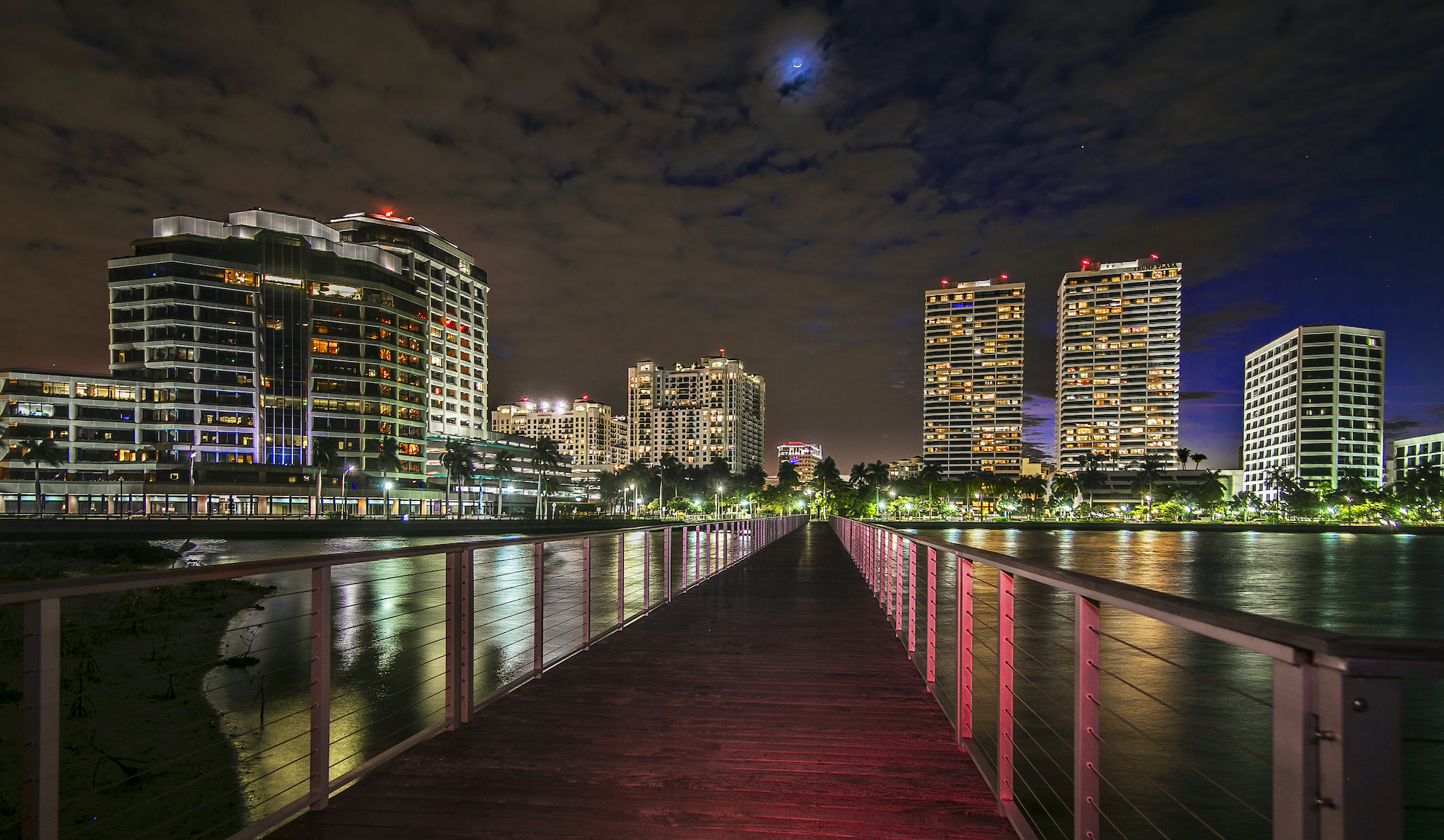
(By FHolmstock) Walkability in West Palm Beach is increasingly about connection: between neighborhoods, urban districts, the waterfront, and destinations beyond Downtown.
There is a particular pleasure in living somewhere that rewards you for stepping outside.
In West Palm Beach, walkability isn’t simply about reaching coffee, dinner, or the waterfront without getting into a car. It is also about connectivity: moving easily among the city’s dining destinations, cultural institutions, public spaces, and evolving mixed-use districts, with transportation links that extend that access throughout Palm Beach County and South Florida.
For buyers considering West Palm Beach real estate, that combination of pedestrian access and broader mobility adds another dimension to location, making the city easier to navigate while preserving convenient options for traveling beyond it.
Table of Contents
- When walking becomes part of the luxury lifestyle
- The districts expanding West Palm Beach’s walkable core
- Walkability allows culture to be part of the neighborhood
- When the neighborhood becomes part of daily life
- How to shop for a walkable address
- Frequently asked questions
- Find your place in a more connected West Palm Beach
WHEN WALKING BECOMES PART OF THE LUXURY LIFESTYLE
For luxury buyers, walkability can make the city itself part of the ownership experience. The value lies not in eliminating the car, but in having greater choice over how everyday destinations, recreation, culture, and social life fit into the day.
A well-connected location makes it easier to incorporate nearby destinations into daily routines, while streets, parks, waterfront areas, and public spaces become part of how residents experience their surroundings.
Within West Palm Beach luxury real estate, that flexibility becomes another consideration alongside architecture, amenities, privacy, and views.
QUICK TAKEAWAY: Walkability gives luxury buyers greater choice in how they experience the city, adding flexibility to a well-positioned home.
THE DISTRICTS EXPANDING WEST PALM BEACH’S WALKABLE CORE
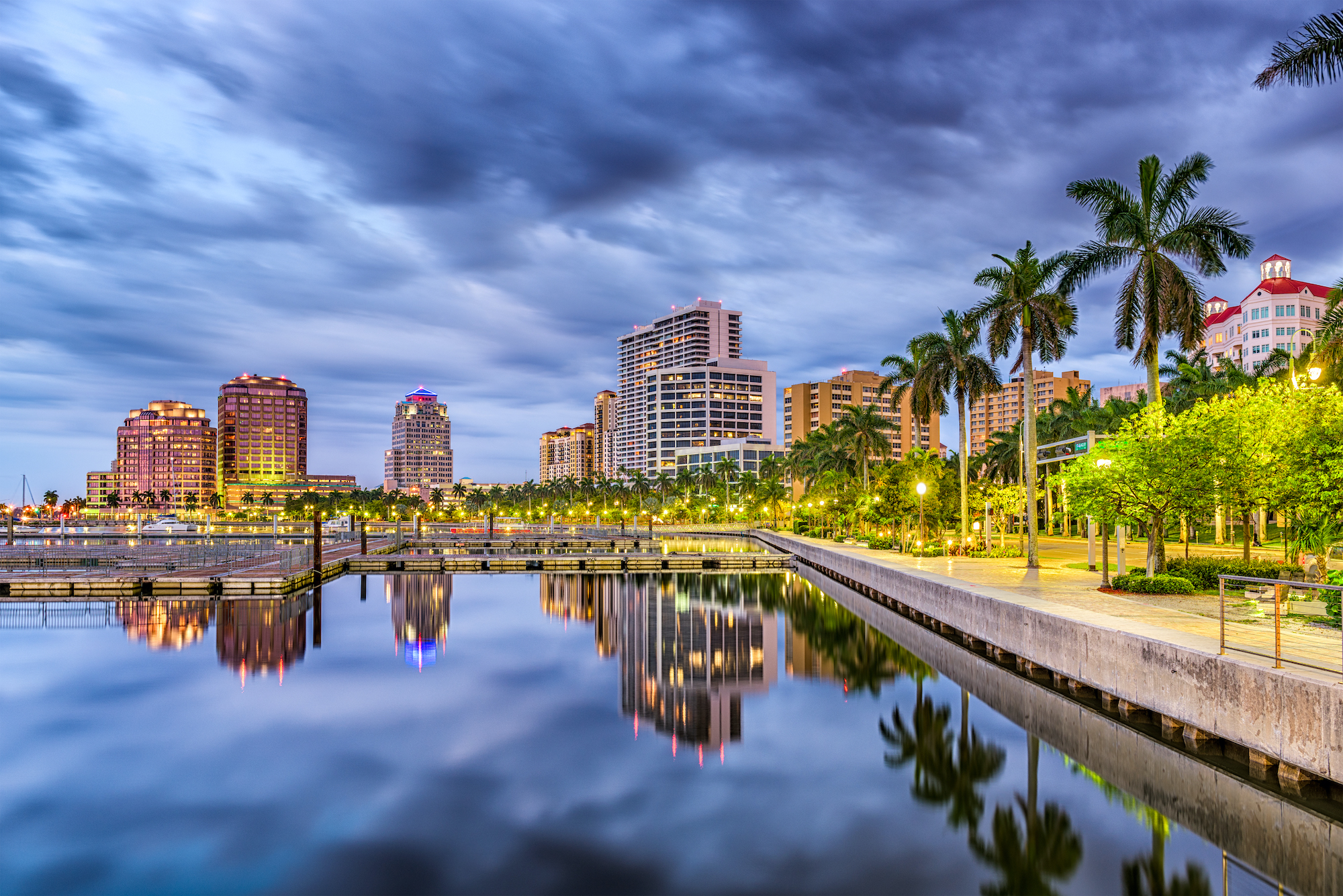
Pedestrian spaces along the West Palm Beach waterfront form part of a broader network connecting the city’s urban core.
Downtown remains an important anchor for walkability in West Palm Beach. Clematis Street places restaurants, shops, entertainment, and the waterfront within a compact urban setting, while CityPlace extends that pedestrian-oriented experience through its mix of dining, retail, offices, residences, and public spaces.
But the city’s walkable footprint is no longer defined by Downtown alone. Just north of it, NORA District is transforming approximately 40 acres along North Railroad Avenue into a mixed-use neighborhood built around restored warehouses, new development, dining, retail, wellness, hospitality, green spaces, and future residences. Its phased evolution illustrates how West Palm Beach is creating additional pedestrian-oriented destinations.
That pattern extends farther north through the Currie Corridor, where plans call for large public open spaces, greenways, and plazas alongside the redevelopment of Currie Park. Additional projects, including the planned extension of Northwood Road across Dixie Highway to Currie Park, are intended to strengthen connections among the waterfront, Northwood, Broadway, and Pleasant City.
Together, these districts point to a broader shift in how walkability functions across West Palm Beach. Rather than depending on a single concentration of destinations, the city is developing a network connecting residences, businesses, recreation, and public spaces. For buyers exploring West Palm Beach luxury real estate, that expanding network adds another consideration when evaluating how a property’s location may function over time.
Learn more about the ongoing developments transforming West Palm Beach.
QUICK TAKEAWAY: West Palm Beach’s walkable appeal is expanding beyond its traditional downtown core as established and emerging districts create new concentrations of daily activity.
WALKABILITY ALLOWS CULTURE TO BE PART OF THE NEIGHBORHOOD
A well-positioned address makes cultural experiences easier to incorporate into daily life. A museum visit, performance, gallery stop, or evening program does not always need to be planned as a separate destination when the city’s cultural institutions are integrated into the places residents already frequent.
The Norton Museum of Art is a strong example. Beyond its exhibitions and permanent collections, the museum maintains an active calendar that includes Art After Dark, lectures and conversations, special performances, and art classes and workshops. For nearby residents, that variety creates opportunities to engage with the museum throughout the year.
The Ann Norton Sculpture Gardens adds another experience nearby, combining art, architecture, and landscape within a historic residential setting. Together, these institutions illustrate how cultural destinations can become part of the surrounding neighborhood rather than places reserved solely for planned outings.
West Palm Beach’s cultural access also extends beyond what can be reached entirely on foot. Connections among neighborhoods and districts, together with the city’s broader transportation network, allow residents to combine walking with other ways of moving around the city. That flexibility expands the idea of a cultural neighborhood beyond a few blocks of Downtown.
For buyers exploring West Palm Beach real estate, the distinction is meaningful. The right location can make culture feel less like an occasional destination and more like part of the rhythm of living in the city.
QUICK TAKEAWAY: The right West Palm Beach address can make museums, performances, galleries, and cultural programming easier to incorporate into everyday life.
WHEN THE NEIGHBORHOOD BECOMES PART OF DAILY LIFE
Some of walkability’s most meaningful advantages appear in ordinary moments. Morning coffee can become a reason to step outside, lunch can extend into a waterfront walk, and an unplanned stop at a shop or gallery can become part of the afternoon.
The distinction is not simply that these outings require less driving. Proximity creates spontaneity. When dining, recreation, and culture are readily accessible, residents have greater freedom to decide how much of the surrounding neighborhood becomes part of their day.
That ease can also change how a neighborhood is experienced over time. Familiar routes reveal favorite cafés, quieter streets, public spaces, and seasonal changes that are easy to miss when moving primarily from one destination to another. The surrounding city becomes something residents engage with rather than simply pass through.
For buyers considering West Palm Beach real estate, that connection can matter as much as proximity measured in blocks or minutes.
QUICK TAKEAWAY: Walkability creates room for spontaneity, allowing the neighborhood itself to become a more active part of everyday life.
HOW TO SHOP FOR A WALKABLE ADDRESS
Walkability may vary from one block to the next, making a property’s immediate surroundings worth evaluating as carefully as its broader location. A walkability score may provide a useful starting point, but it doesn’t fully capture how an address functions in daily life.
When considering a home, look beyond the score and evaluate the connections that matter to the way you expect to use the property.
| WHAT TO EVALUATE | WHAT TO LOOK FOR |
|---|---|
| Everyday access | Restaurants, cafés, shops, recreation, and services that are genuinely practical to reach on foot |
| Street experience | Sidewalks, crossings, shade, lighting, traffic patterns, and the overall quality of the pedestrian environment |
| Activity throughout the day | How the surrounding area functions in the morning, evening, on weekends, and during busier seasonal periods |
| District connections | Whether nearby neighborhoods and destinations connect naturally or require indirect routes and difficult crossings |
| Transportation options | Practical access to Brightline, Tri-Rail, major roads, bridges, and Palm Beach International Airport for destinations beyond walking distance |
The last consideration is particularly important in West Palm Beach. A walkable address does not need to function independently of other forms of transportation. Rail connections and major routes can extend a resident’s mobility throughout Palm Beach County and South Florida while keeping daily destinations close to home.
Evaluating these details requires seeing an address at the level of the buyer’s actual routine. Our knowledge of West Palm Beach luxury real estate helps clients assess not only the property itself, but how its location, surroundings, and connections align with the way they intend to live.
QUICK TAKEAWAY: Look beyond a walkability score to understand how an address performs on foot, between districts, and as a starting point for travel throughout the region.
FREQUENTLY ASKED QUESTIONS
How can future development change the walkability of a West Palm Beach address?
New development can strengthen pedestrian connections by adding public spaces, mixed-use destinations, improved streetscapes, or links between existing neighborhoods. Buyers should distinguish between improvements that already exist and those that remain planned or under construction, paying attention to timelines and how proposed projects may affect the routes they would actually use.
What might buyers overlook when evaluating walkability in West Palm Beach?
Distance alone does not determine whether a destination is practical to reach on foot. Shade, sidewalk conditions, street crossings, traffic, heat, and seasonal weather can change the experience considerably. Visiting an area at different times of day will reveal how comfortable and convenient those seemingly short distances actually feel.
How should buyers balance walkability with privacy and residential setting?
The most walkable address is not necessarily the right address for every buyer. Some may prefer immediate access to active dining and retail districts, while others want a quieter residential setting within easy reach of them. Evaluating that tradeoff according to daily routines, entertaining preferences, and desired surroundings should help define the right degree of connectivity.
FIND YOUR PLACE IN A MORE CONNECTED WEST PALM BEACH
Finding the right address means understanding how the property, neighborhood, and wider city work together.
Contact Suzanne at 561.373.0941 or send a message to begin your West Palm Beach home search.